Tour Operator License No. 22007631, issued on April 20, 2022
An Unforgettable Adventure
This journey is not about luxury—it’s an authentic adventure to remote and unique corners accessible only on foot, horseback, or by helicopter. Accommodations and meals will be simple and genuine, and that’s precisely where their unique charm lies. Embrace the simplicity: gathering firewood for the sauna, organizing fresh water, and sleeping in sleeping bags in tents right in front of the sacred mountain.
This trip is about connecting with nature and yourself, an authentic adventure that will leave you with extraordinary memories.
This trip is about connecting with nature and yourself, an authentic adventure that will leave you with extraordinary memories.
We will meet calm and friendly horses, learn the basics of horseback riding, and set off on a breathtaking adventure through Altai. Along the way, we'll enjoy the peace and tranquility of nature, immerse ourselves in the culture of the local people, and gain hands-on experience in horse care, all while learning about the traditions of nomadic life.
In the evenings, gathered around a campfire, we will share our impressions and listen to fascinating stories about life in this remarkable region.
In the evenings, gathered around a campfire, we will share our impressions and listen to fascinating stories about life in this remarkable region.
72 kilometers on horseback
Three mountain hikes ranging from 2 to 18 kilometers
Our journey begins in a cozy village, where we set out along local trails and routes. Ascending mountain peaks rewards us with fresh air and panoramic views, while evening stops by picturesque lakes offer moments of solitude and connection with nature. We'll explore the region's flora and fauna, learn to appreciate the beauty of untouched landscapes, and discover the traditions of indigenous peoples.
Overnight stays in unique alpine camps
Each night, our camps are set up in scenic locations surrounded by majestic peaks and crystal-clear rivers. The camps are equipped with everything needed for a comfortable stay
Nighttime is not only a chance to relax physically after a day of hiking but also an opportunity to form new friendships with like-minded adventurers. Every evening becomes a ritual of connection with nature, leaving warm memories and unforgettable moments of time spent in this extraordinary corner of the earth.
Waterfalls cascading from great heights create a powerful roar and stunning rainbows, surrounded by lush green forests that are home to many animals. These natural wonders fill the soul with inspiration and leave lasting memories of the beauty and majesty of Altai.
Refreshing mountain rivers, lakes, and waterfalls of Altai
Stunning landscapes with mountain peaks and lush green meadows
Along mountain rivers and streams, whose echoes blend with birdsong, grow unique plants that captivate and inspire travelers. Altai is a true treasure for nature enthusiasts, offering unforgettable moments and experiences that will remain etched in memory forever.

Tour Program
Tour Organization
Tourist Comfort

7 days

6 nights

14 to 60 years

Up to 9 people

Difficulty Level: Medium

Transfer from Ust-Kamenogorsk

Official Tour Operator

Satellite internet

Hot shower and sauna

Meals prepared by a chef

Trekking equipment

Tent camp accommodations

Charging stations
Altai
Horseback Tour
Seven unforgettable days in the mystical Altai Shambhala, where you will experience a journey akin to a small, full life. Each participant will gain the transformative experience they have long dreamed of.
Untouched, pristine wilderness that rejuvenates and inspires
As we journey through this extraordinary region, we will savor its untouched landscapes: majestic mountains, dense forests, and endless green meadows. Each morning begins with crisp, fresh air infused with the scents of pine and wild herbs, while the sounds of the forest evoke a profound connection to nature.
The emotions experienced by travelers at Mount Belukha range from awe and wonder to deep respect for nature. This towering peak leaves an indelible mark on the hearts of all who embark on this journey, inviting them to reconnect with themselves time and time again.
Belukha
The sacred Mount
Day One

We’ll meet you in Ust-Kamenogorsk and begin our journey to the first destination—Katon-Karagay village (350 km).

We’ll have lunch in Katon-Karagay, obtain permits to enter the border zone and border strip, and then continue to Yazevoye Lake.

A few kilometers from Yazevoye Lake, we’ll rest and spend the night in a cozy, traditional Altai-style house.
Day Two
Early in the morning, we’ll saddle the horses and set off on a nearly 40-kilometer journey. The scenic trail winds along the lake, allowing us to immerse ourselves in its beauty and enter a meditative state, feeling Life in every cell of our being.
We’ll arrive at the White Berel River Valley, near the old winter camp of Sarsenbay, where we’ll stop for lunch. From there, the path leads us through the National Park, between fir and cedar trees, and alongside thickets of blueberries and honeysuckle. Imagine the delightful aromas that will surround us.
By evening, we’ll reach the Kok-Kol Waterfall and the Base Camp, where we’ll stay for the remainder of our adventure.
Day Three
In the morning, we’ll take a short trek to the Kok-Kol Waterfall near the camp. It is one of the largest mountain waterfalls in Altai, with a height of 80 meters.
Here, immersed in silence, we’ll feel the immense power of nature and draw strength from it. Later, we’ll visit the “Equilibrium” Lake to find our own sense of zen. Though the lake is relatively small, the surrounding landscapes are breathtaking. Pine-covered mountains transition into alpine meadows at higher elevations. From here, there is a magnificent view of Mount Belukha, which reflects in the lake like a mirror on clear days.
We’ll return to the Base Camp, where a hot dinner will be waiting for us.
Day Four
We’ll take a radial hike to the Upper Camp, crossing a river and visiting Kok-Kol Lake along the way.
The Upper Camp is located at a mountain pass, accessed by an old road built along glacial moraines. This is a world of rocks, glaciers, snowfields, mosses, lichens, high-altitude lakes, and crystal-clear streams. It’s also an open-air museum, as the area was once home to mining operations. Here, we’ll release our inner treasure hunters, and someone might even get lucky!
We’ll return to the Base Camp, where a hot dinner will be waiting for us.
Day Five
We’ll embark on a 10-kilometer trek, a meditative journey that mirrors the flow of life itself! Observing our states during the hike, we’ll become aware of our actions and emotions, reflecting on how we navigate challenges, notice signs, and respond to everything happening within and around us.
The path will lead us to “Warm” Lake and then to the Great Berel Glacier. After soaking in the stunning views and personal insights, we’ll arrive at the sacred site of “Kyndyk-Tas” a prayer stone that attracts pilgrims from all over the world! In this powerful and enveloping energy, we’ll let go of what needs to be released, solidify our realizations, and draw strength to guide us further in life.
We’ll return to the Base Camp, where a hot dinner will be waiting for us.
Days Six and Seven
On the sixth day, we’ll saddle up again and descend from our beloved Base Camp to Yazevoye Lake, where we’ll spend the night in the house. In the warm circle of our group, we’ll share our impressions of the journey.
On the seventh day, we’ll return to Ust-Kamenogorsk, stopping along the way to visit the Berel Burial Mounds. It was here that decorations were discovered, later used to reconstruct Kazakhstan’s third “Golden Man.”
Horseback Tour to Altai with photosafari-travel

Satellite internet

Hot shower and sauna

Trekking equipment

Charging stations

Meals prepared by a chef

Tent camp accommodations
Tourist Comfort

7 days

6 nights

14 to 60 years

Difficulty Level: Medium

Transfer from Ust-Kamenogorsk

Up to 9 people

Official Tour Operator
Tour Organization
Daily Program
This journey is not about luxury—it’s about a genuine adventure into remote and unique corners accessible only on foot, horseback, or by helicopter. Accommodations and meals will be simple, but this simplicity is what gives the experience its special charm.
Upcoming Tours
Choose a suitable tour and submit your application to book a spot in the group.
Accommodation and Tour Cost
Tour Conditions
Two nights in a forest cabin and four nights in tents
Be prepared for simplicity in everything: we gather firewood for the sauna, organize fresh water, and sleep in sleeping bags in tents right in front of the sacred Mount Belukha.
Setting up tents together, cooking meals over a campfire, and overcoming challenges bring the group closer, creating an atmosphere of friendship and support. In the evenings by the fire, we share stories and dreams, feeling nostalgia for the wonderful moments spent in nature and realizing the importance of such trips in our lives.

Included in the tour price
- Transfer from Ust-Kamenogorsk along the entire route and back
- Permits for the border zone and border area
- Meals, drinking water, sauna, and shower
- Entrance tickets and fees for Katon-Karagai National Park, museums, and burial mounds
- Services of a horse guide and tour guide
- Rental: horses, professional tents, sleeping bags, and camping gear
- Accommodation in the tent camp and cabin
- Electricity in the base camp for charging gadgets
- Free satellite internet (low speed, but sufficient to contact loved ones).

Not included in the price
- Flight or other means of arrival to Ust-Kamenogorsk
- Accommodation in Ust-Kamenogorsk
- Meals in Katon-Karagai on the first and last day
- Insurance (optional, arranged independently)
- Personal expenses during the journey or at locations.

Important information
In the mountainous area of Altai:
Waterproof footwear, spare shoes for the camp, windproof and waterproof clothing, a rain cover for your backpack, a sun hat, warm clothing, sunglasses, sunscreen and lip balm, insect repellent, a first aid kit, and personal hygiene products.
- There are no stores, pharmacies, or supermarkets.
- There is no stable internet or mobile signal.
- We provide unlimited drinking water.
Waterproof footwear, spare shoes for the camp, windproof and waterproof clothing, a rain cover for your backpack, a sun hat, warm clothing, sunglasses, sunscreen and lip balm, insect repellent, a first aid kit, and personal hygiene products.
Altai Horse Riding Tour Price
The price includes transfer, horse rental, meals and comfortable camping.
Horseback Tour to Altai at the Foot of Mount Belukha
Adult
14+ years old
Price per person
1 000 $
Team
Photosafari-travel
We, the Photosafari team, are a family of road lovers and true adventurers, exploring unexplored paths and new discoveries. Every journey we undertake is infused with a spirit of adventure and an atmosphere of expeditions.
Over 10 years of traveling through the Untamed Kazakhstan and dusty corners of the planet, we have captured tons of unique material, including videos that have glorified Kazakhstan worldwide.
Over 10 years of traveling through the Untamed Kazakhstan and dusty corners of the planet, we have captured tons of unique material, including videos that have glorified Kazakhstan worldwide.
Ekaterina Koshko
Co-founder of Photosafari.kz
Konstantin Kikvidze
Co-founder of Photosafari.kz
Konstantin Ludanov
Guide, Administrator, Driver
Why choose us
Comfort and emotions
Say goodbye to boring and rigid tours — only we offer custom photo-adventures with well-thought-out routes, maximum comfort, and care for your emotions.
Taking Care of Everything
We handle transfers, meals, accommodation, drinking water, showers, internet, and much more to ensure every participant feels comfortable and cared for.
Safety and Health
We prioritize the safety and health of our guests at every stage of the journey, including excursions and accommodations.
Unique Tour Programs
Unmatched programs that other companies won’t offer. As true adventurers, we are eager to share our experiences and emotions with our guests.
Payment and Guarantees
Choose a convenient way to pay for the tour. In case of unforeseen circumstances, we guarantee a full refund.
Complete Immersion
An exhilarating adventure amidst majestic mountains, crystal-clear lakes, and wild forests, where every step fills the soul with harmony and the beauty of nature.
Customer reviews
Booking and payment procedure

Booking
The tour price is indicated in US dollars. Payment is made according to the exchange rate on the day of payment. To reserve a spot on the tour, please submit an application and make a 30% prepayment. Please note that credit cards are not accepted.

Contract
Once you confirm your participation, we will issue an invoice for the deposit and sign a contract. We value our reputation and always fulfill our commitments.

Guarantees
If access to the destination is officially restricted, a key part of the trip is cancelled, or flights are cancelled, we guarantee that you can transfer your deposit to another trip or receive a refund.
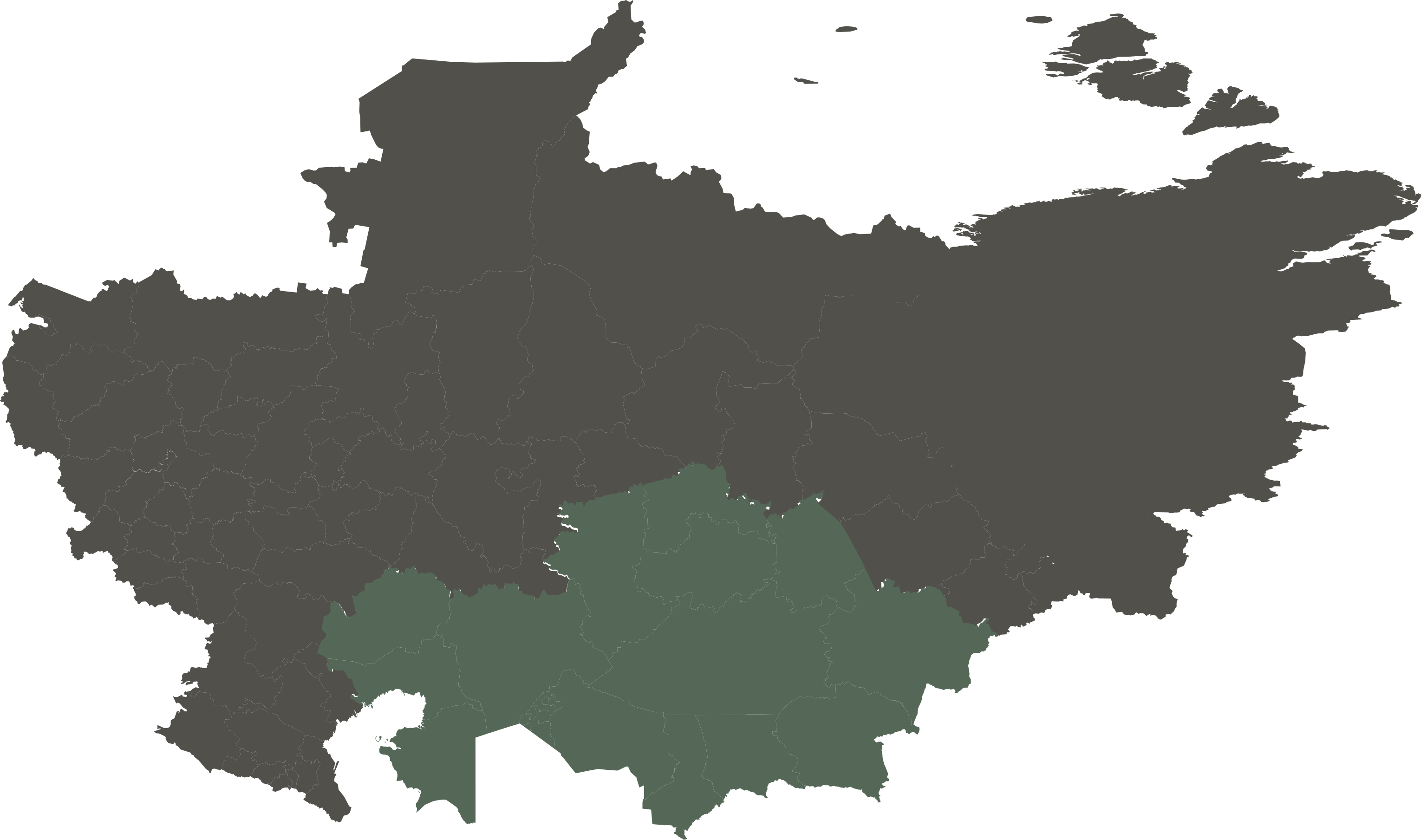
How to Get to Altai
Our journey begins in the city of Ust-Kamenogorsk. Please note that tickets for flights or trains to Ust-Kamenogorsk are not included in the tour package and must be purchased separately. Our administrators will provide you with information on suitable dates and flight schedules.
Almaty

You can reach Ust-Kamenogorsk from Almaty as follows:
- By Plane: A direct flight takes about 1–1.5 hours. Ticket prices start at 20,000–25,000 tenge one way.
- By Train: Travel time is about 20–24 hours. Tickets cost 6,000–12,000 tenge, depending on the class.
- By Bus: The journey takes about 23–25 hours. Ticket prices range from 7,000–9,000 tenge.
- By Car: A trip by car will take approximately 17–20 hours.
Astana
You can reach Ust-Kamenogorsk from Astana as follows:
- By Plane: A direct flight takes about 1–1.5 hours. Ticket prices start at 25,000–30,000 tenge.
- By Train: Travel time is 12–16 hours. Tickets cost 5,000–10,000 tenge.
- By Bus: The journey takes about 15–17 hours. Ticket prices range from 7,000–10,000 tenge.
- By Car: A car trip takes approximately 10–12 hours.
Karaganda
You can reach Ust-Kamenogorsk from Karaganda in several ways:
- By Plane: There are no direct flights; you’ll need to transfer in Almaty. The journey, including the layover, takes about 4–5 hours.
- By Train: Travel time is 18–20 hours. Tickets cost 5,000–10,000 tenge.
- By Bus: The journey takes about 20–22 hours. Ticket prices range from 6,000–8,000 tenge.
- By Car: A trip by car will take 12–14 hours.
Moscow
You can reach Ust-Kamenogorsk from Moscow in several ways:
- By Plane: A direct flight takes about 5–6 hours. Ticket prices start at 25,000–50,000 rubles.
- By Train: There are no direct trains, but with transfers, the journey can take 3–4 days.
- By Bus: Travel with transfers takes 4–5 days.
- By Car: A trip by personal car will take 40–50 hours, depending on the route and conditions.
Ust-Kamenogorsk
Belukha
We will meet you in Ust-Kamenogorsk and begin our journey.

Corporate Horseback Tours to Altai

Building team spirit through group adventures is an excellent HR solution for your company.
Photosafari-travel organizes customized tours tailored to your needs.
Photosafari-travel organizes customized tours tailored to your needs.
Frequently Asked Questions
The horseback tour to Altai spans 7 days filled with exciting adventures: from Ust-Kamenogorsk to Katon-Karagay, with treks to stunning waterfalls, glaciers, and high-altitude lakes. Highlights include visiting Kok-Kol Waterfall, Lake “Equilibrium,” the Great Berel Glacier, the sacred “Kyndyk-Tas” at the foot of Mount Belukha, and concluding with a tour of the Berel burial mounds, where the third “Golden Man” was discovered.
The full program is available at this
The full program is available at this

The seven-day horseback tour in Altai is of moderate difficulty.
- Prior experience with horseback tours or good physical fitness is a significant advantage.
- The tour is suitable for families with children aged 14 and older.
- For participants over 60 years of age, individual cases may be considered. A consultation with a sports physician specializing in mountain hikes, trekking, or ascents is recommended to assess health and prepare individually.
- Weight limit: Participants up to 90 kg are accepted, but those in excellent physical shape may weigh up to 100 kg.
Kazakhstan and Russia Citizens: Applications must be submitted at least 20 days in advance.
Foreign Citizens: Applications must be submitted at least 35 days in advance.
This allows enough time to arrange permits for the border zone and border strip, as well as transfers, meals, and accommodations.
Foreign Citizens: Applications must be submitted at least 35 days in advance.
This allows enough time to arrange permits for the border zone and border strip, as well as transfers, meals, and accommodations.

Essential items for the horseback tour in Altai include:
- Waterproof boots and a pair of shoes for camp.
- Warm clothing.
- Windproof and waterproof gear, including a rain cover for your backpack.
- Sun hat, sunglasses, sunscreen, lip balm, and insect repellent.
- Personal first aid kit.
- Hygiene items.
- Check the full list of gear
- Personal belongings from the gear list should be prepared in advance.
- On steep slopes, rocky areas, and snowy sections, horses will be led on foot.
- Trained instructors and horse handlers will assist you throughout the route.
- All necessary equipment for a comfortable journey will be provided.
- Note: The itinerary may be adjusted due to weather conditions for safety purposes at the guide’s discretion. Your understanding is appreciated!
The horseback tour to Altai and Mount Belukha includes:
- Transfers from Ust-Kamenogorsk throughout the route and back.
- Permits for the border zone and border strip.
- Meals, drinking water, a bathhouse, and showers.
- Entry fees for Katon-Karagay National Park, museums, and burial mounds.
- Services of a horse guide and trek leader.
- Rental of horses, professional tents, sleeping bags, and camping gear.
- Accommodation in tents and a lodge.
- Electricity at the base camp to charge gadgets.
- Free satellite internet (limited speed, but enough to contact loved ones).
Flights or other transportation to Ust-Kamenogorsk.
Accommodation in Ust-Kamenogorsk.
Meals in Katon-Karagay on the first and last day.
Travel insurance (optional, arranged independently).
Personal expenses during travel or at destinations.
Accommodation in Ust-Kamenogorsk.
Meals in Katon-Karagay on the first and last day.
Travel insurance (optional, arranged independently).
Personal expenses during travel or at destinations.
This trip is about genuine adventure in incredible remote locations accessible only by foot, horseback, or helicopter. Accommodations and meals are simple, but that simplicity is part of their charm.
Expect a back-to-basics experience: gathering firewood for the bathhouse, ensuring fresh water, and sleeping in sleeping bags in tents right in front of the sacred Mount Belukha.
Expect a back-to-basics experience: gathering firewood for the bathhouse, ensuring fresh water, and sleeping in sleeping bags in tents right in front of the sacred Mount Belukha.
In the mountainous regions of Altai:
- No shops, pharmacies, or supermarkets are available.
- No stable internet or cellular network coverage exists.
- Unlimited drinking water will be provided by the organizers.
- Free satellite internet will be available (with low speed, sufficient for contacting family).
Your safety is our priority. Guides are well-trained and will provide safety briefings to all participants. It’s crucial to follow their instructions at all times.
Travel insurance for accidents is not included in the tour price. You may purchase insurance independently.
Travel insurance for accidents is not included in the tour price. You may purchase insurance independently.
Yes, the tour includes opportunities to take showers, and at least one visit to a bathhouse is planned.
Photosafari Tours
Leave a request
We will contact you shortly
By submitting the application, you agree to the Privacy Policy


Equipment Provided by the Organizer
Tent: 2-person and 3-person tents available.
Sleeping bag: Bringing your own is welcome.
Sleeping bag liner.
Foam sleeping mat (8–12 mm thick).
Clothing for Camp and Sleeping
Clothes for relaxing at the camp (pants, shirt, shorts, T-shirt, thermal underwear for sleeping).
Warm sweater or hoodie (fleece or wool).
Warm hat (fleece or wool).

Headwear (cap or wide-brimmed hat).

Footwear
Waterproof shoes (rubber boots, military boots, or high boots; rubber is preferred).
Sneakers or trekking boots.
Spare shoes for the camp.

Additional Accessories
Gloves (cotton gloves are suitable).
Socks (2–3 pairs of cotton socks and 2 pairs of wool socks).
Windproof and waterproof clothing, raincoat.

Equipment
and Tools
Sunglasses.
Headlamp.
Water bottle (preferably with a carabiner).
Portable seat (foam mat).
Personal utensils (plate, spoon, mug).
Camera or video camera (optional), spare battery.

Hygiene
and Health
Toiletries (lip balm, sunscreen, towels, shampoo, soap).
Personal medications (a basic first-aid kit will be provided by the guide).

Clothing for Activities
Comfortable clothing for horse riding and hiking (lightweight, quick-drying pants, long-sleeved shirt or T-shirt, windbreaker).
Warm jacket (synthetic or down). Remember, the weather can be unpredictable.


Transportation and Storage
Backpack or travel bag.
Small pouches or garbage bags for organizing and protecting items.
Heavy-duty polyethylene bags with a volume of 160–180 liters (for extra protection against dirt).
Personal Items Checklist

Before heading out on the tour, we recommend consulting your doctor, especially if you have chronic illnesses or other health concerns. This will help avoid unpleasant situations and ensure a more comfortable trip.
Packing List




© 2014–2026 "Photosafari-travel"
Website materials may be reproduced only with an active link to photosafari-travel.kz.
Use of this website is subject to our Terms of Use. Please read our Privacy Policy for information about how we handle personal data.
Use of this website is subject to our Terms of Use. Please read our Privacy Policy for information about how we handle personal data.